


Plaster vs Drywall, which is best? As many of you know by now, I’m a stickler for historic accuracy when it comes to remodeling. Some might describe me as obsessive or possibly deranged, but they’re just haters. I prefer to be described as “particular”, or “having high standards” – that just sounds less likely to get me locked up in a padded room. My “particularities” led me to choose plaster instead of drywall when we had to replace several walls in our 1930’s vintage home. Sure, drywall guys will tell you they can match any texture, but drywall is still very different from plaster. Before you dive into hanging drywall in a vintage or high-end home, consider the alternative of plaster.
Plaster vs Drywall
These days you have two general options when it comes to finishing walls: the first is standard drywall, which we’re all pretty familiar with. It’s everywhere, and so is the dust from installing, sanding and finishing it. Drywall consists of gypsum sheets (sheetrock) screwed or nailed to the studs. Drywall compound and tape are applied to the seams between boards, and the compound is also coated over the fasteners to cover up the heads. A high-end level 5 drywall finish includes a final skim coat similar to a plaster job, but most drywall jobs aren’t done at that level. Even when they are, the finish durability is still underwhelming when compared to cement-like plaster.
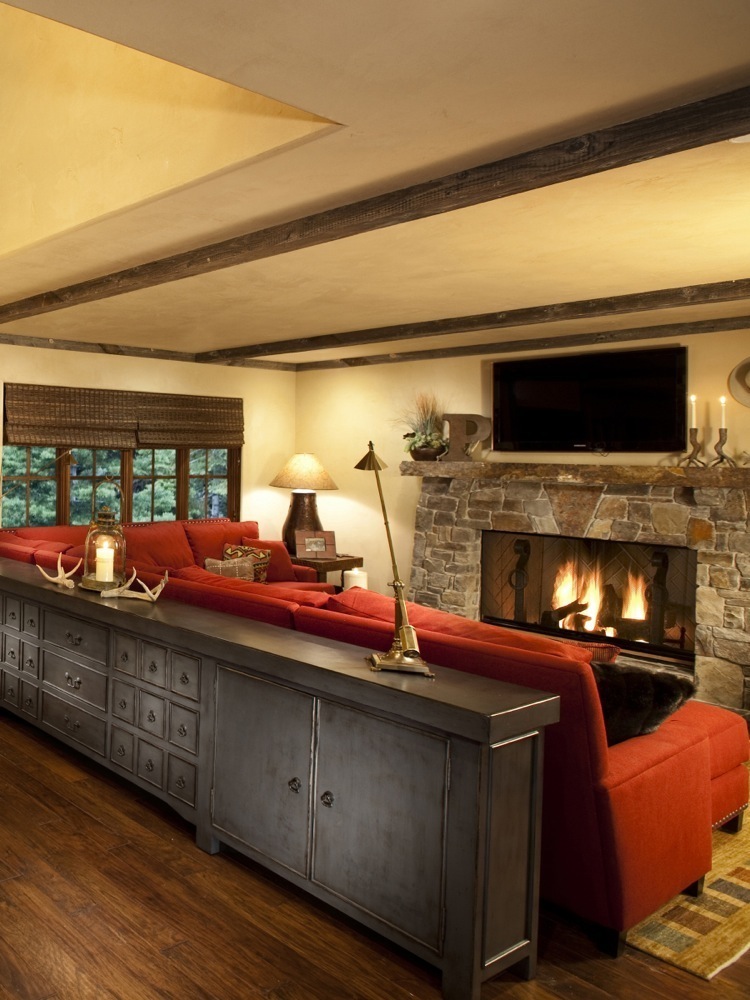
Modern plaster, on the other hand, is typically applied over a special type of wall board referred to as blue board. The old style was usually applied over lath, but that method is exceedingly rare these days. Blue board looks like sheetrock (other than the color), but it’s designed to handle the high degree of moisture in wet plaster, and it’s engineered to create a tight bond with the plaster compound. The plaster is applied over the blue board either in multiple coats with a scratch and then finish coat (a more traditional style), or in a single or double veneer coat. Either way, the plaster covers the entire wall surface. Don’t confuse blue board with green board, (the green stuff is just moisture resistant sheetrock typically used in bathrooms for drywall projects, it’s not made for plaster).
Many people consider plaster finishes to be more high end than drywall, and they have seen a surge in popularity. I think mainly because of the unique expertise required (there are probably 1000 drywallers to every plaster pro here in San Diego), plaster projects tend to cost a bit more. All in all though, the two techniques are fairly comparable in overall price.
Why We Chose Plaster Instead of Drywall
For our particular projects, several obsessive intrusive thoughts things convinced me to select plaster instead of drywall:
- Plaster is much harder than drywall. This makes for a far more durable wall surface. This is vital if you have kids that think your house is a indoor race track. Drywall’s lifespan can be measured in decades, or less if it gets wet. Plaster’s lifespan can be measured in centuries.
- Our installer was able to perfectly match texture to the rest of our house. Anyone looking at the skip trowel finish and bull-nose details on the new plaster would have no idea it wasn’t original to the house. If you’re trying to match texture on existing plaster work, I’d definitely go with plaster if possible. There are lots of variations of plaster though, so if you’re matching, make sure your installer knows the best-suited plaster and application technique.
- Plaster is more fire resistant than drywall. If you’re paranoid about that kind of thing this may sway your thinking.
- The acoustics of plaster just aren’t the same as drywall. Plaster tends to create a much more echoey sound than drywall. Because Plaster is a bit thicker, more solid, and has more mass, plaster is also a somewhat better sound barrier. If you’re really concerned about sound proofing, check out our review and use of Green Glue Soundproofing compound that we used in conjunction with plaster walls.
- Plaster is a more unique skilled trade. We were able to find a true plaster craftsman with decades of experience and a great reputation here in San Diego. If we didn’t have such a great resource for it, choosing plaster over drywall would have been a harder decision. If you plan to do it yourself without much experience, drywall is definitely far more DIY friendly than plaster. As noted in our Top 10 Don’t Do It Yourself Projects Article, actual plaster work is not particularly DIY friendly. I tried my hand at it on a small job, and quickly decided it’s worth hiring a pro. After watching a pro do it, you’ll probably think plastering is easy. . . . trust me, it’s not.
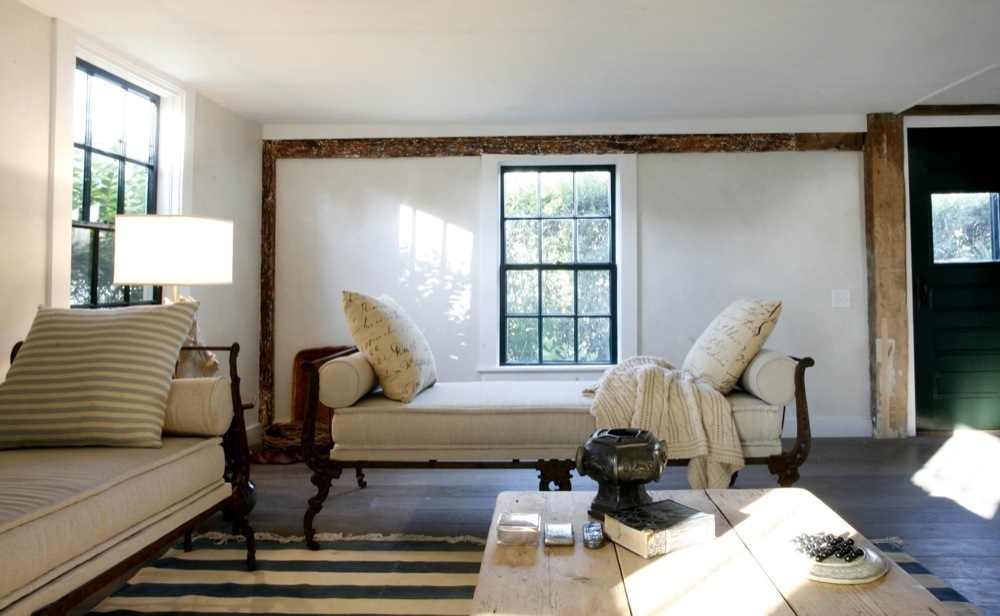
Companies like USG make a plaster in a multitude of varieties for specific uses. And there are even several companies like American Clay that make gorgeous evironmentally friendly earthen plaster, as seen in the images for this article. Whatever you decide, resources like Angie’s List can help in tracking down a local drywaller or plaster pro. Local plaster or drywall supply companies and the manufacturers of the products used can also be good sources for recommended installers. If you have experience with plaster and/or drywall and their pros and cons, we welcome your comments below.

Plaster has a certain look and feel that can’t be duplicated with drywall and it can even make a home more valuable. The right plaster installer can create detailed medallions and crown molding that add lots of charm to a home. Thanks for this info!
No tar on road outside house heavy traffic using our road cracks forming in corners of house looks like opening up they placed a box on side of road that was twelve months ago they said they would contact me but haven’t worried about house
Please comment on plastering a bathroom – the pros and cons and any tips that you have. Is there a specific type of plaster or thickness that you recommend? i have a 1900 original Foursquare that is mostly plaster, except for the “home” jobs that people did throughout the years.
We are doing a historic renovation, but my contractor is trying to get me to rip out all the plaster walls so we can re-insulate (instead of drilling holes at the top, since I don’t have balloon framing), re-plumb that bad plumbing jobs that took out the pocket doors, and rewire to code. I want the plaster, even if I have to spend more for it. Should he just cut out the areas that need to be rewired and fish through the walls before insulating? I think my architect wants to do that blown insulation or foam. Not quite sure on that yet.
The other issue is that the limestone foundation is badly cracked and doesn’t have footers. When a previous owner dug down a foot more, the shoring job wasn’t done properly, nor were the jacks/footers done properly. My structural engineer is looking at just installing footers and shoring up the outside walls below grade, or, cribbing the whole house, taking out the two foot thick foundation completely, doing a poured form, and putting the limestone around it above grade. Either way, I expect the plaster walls to crack some. Is it better to jack up or crib a house in the spring/summer when there is more humidity (Kentucky), or is that not a factor?
Thanks for your comments.
I tore out plaster on recommendation from a contractor. I feel it was a big mistake. I should have cut access for wiring where needed and blown in fiberglass, patch the wiring runs and insulation holes, and done. I’d avoid the foam. Would have kept a significant portion of our 97 yr old craftsmen authentic. Live and learn.
If you can find a good plaster guy, it’s insane not to go that route. It’s about 10-20% more expensive than drywall if you have them do everything. But they’re usually more than happy to have you hang the rough blueboards if you want to save some money — they handle the taping and corner beads. Even an ape can do a neat job putting up the raw boards — they don’t need to be neat or close-fitting, just plumb and level. I would never go back to drywall in a million years — plastering is just 1000x better in every way. Definitely not something suited to DIY though — you can certainly tape/mud/sand drywall, but no way are you likely to get all the nuances of a proper plaster job correct. Chances are you’ll make a horrific mess. Best to get a pro for sure.
I just wanted to thank you for helping me learn more about plaster and drywall. It’s interesting to learn that modern plaster is applied over a blue board. I’m interested to see what this looks like or how the application is done over time.
I live in Florida. Termites are common. My house is an older house with old-fashioned plaster walls instead of drywall. Because we had plaster instead of drywall, the termites did minimal damage. They can’t eat plaster. It kept them trapped in a rather small, easily repairable space.
Plasterer in Bellingham WA? When old wallpaper taken off, the plaster walls had some very long cracks 1/2″ or more wide- not sure how to fix or whether to go with drywall.
Just giving a shout out for the Bellingham mention. Born and raised Hamster here,
Good afternoon,
I really appreciate your article but have one question that you maybe able to answer. I had a ceiling that was plaster with slats. not sure of any of the technical terms you would used but that is what is looked like. Anyway, they had to tear it down due to fire and smoke. I wanted the plaster put back up but funding is not there.Do drywall and plaster have the same insulation properties or is one better then the other? I am thinking the plaster was better, but want to know for sure.
Thank you in advance.
Fran
I abhor drywall and will NEVER use it… Except on ceilings.
Had a relative with a scar on her head when a ceiling fell on her as a child. Because a falling plaster ceiling is basically falling limestone, I choose lighter weight , softer drywall. Note, I always use setting type compound, not bucket mud.
To insulate you can put rigid foam. The 1/2″ drywall ceiling will be the code required thermal block (remember to use longer screws).
Hello, nice article and comments. I’m a handyman and have done my share of drywall from repairs to new builds. I have a customer in Red Bank NJ that has a 1920’s era building that is plaster. There has been some water integration in a couple areas, mainly ceiling and under windows, that’s has made the plaster flake off. Once the roof and windows are sealed. What would be my best bet to repair these problem areas? Thank you in advance….
1. Look folks, the three coat plaster system wall is dead, and not coming back. If you have it, keep it; rehab it with a good skim and it will last lifetimes if not abused too much. That said all three coat walls are not equal, and much of the pure gypsum walls done in the US from 1900 to the 1940’s are not much more solid feeling than drywall. If your walls predate 1900 it is certainly lime, a vastly superior material which has the unfortunate nature of taking way too long to cure. You DO NOT want to get rid of lime plaster walls for ANY reason. Still, even the very thin gypsum plaster walls of the 30’s and 40’s can be shored up to feel more solid like the earlier walls. Those 1″ thick lime walls feel very close to a masonry wall. It makes the whole home feel more secure and solid – because it is.
2. Modern veneer plasters are just drywall or blueboard (which is special type of drywall) with 1/16, maybe 1/8″ of gypsum plaster skimmed over it. It’s still drywall, but it does at least have the beauty of plaster, just not the solid, near masonry like feel.
3. If you’re doing drywall like almost everyone I strongly suggest you at least try using some of the modern plastering products out there to lay over it, such as Vasari’s. It really isn’t that much more difficult or expensive than painting, and is completely VOC free, non-toxic in every way, and in the aesthetics department, blows any type of house paint away. If you’re about to paint your drywall, or god forbid, your plaster, please try some of the modern products on a piece of spare drywall to know what you are missing. Why “faux” when you can do the real thing? Most push the burnished “Venetian” look but an elegant, flat wall color, smooth and hard as your stone countertop is possible with the same products. Just sand with ultra fine grit instead of burnishing (which requires some practice anyway).
You can still use lime plaster. It can be made to set with any number of pozzolans. Just don’t use Gypsum gauging plaster. The chemistry is not good for longevity.
Just ran across this. The photo is copyrighted. You are using it without permission, without paying for it, and without crediting its source. Your use is a violation of copyright law—- it’s illegal. Please take it down immediately or contact me to credit it fully and pay for it.
Sherri, you sum up what’s wrong here in the U.S. It’s all about money, right? The guy was trying to explan about fundamental differences in home building and all you care about is making money off of a photo. How do you look at yourself in the mirror?
Hi Sherri. First off, my apologies. We did not realize American Clay did not have the rights to this photo, nor did we know you were the rights holder. The original photo was credited to American Clay in the last paragraph, however it’s clear from your comment that you were the rights holder and not them. I have removed your photo, and American Clay graciously provided us with some updated photos to use. Sorry again for any distress this caused you and best of luck with your work.
Calm down. It’s not like he was trying to make money off of it. It was an informational article. Get a grip.
I think TJ’s point was basically this was not intentional, yet you immediately jumped down the guys throat publicly. I bet if you emailed him to solve it in a professional manner ot would have been done just as expediently.
Hi TJ. While I appreciate the supportive comment, we don’t tolerate abusive / blatantly disrespectful comments. For this reason, I left your comment up, however I removed the expletive directed at another commenter. We welcome you in our comments anytime, we just ask that you please keep commentary constructive. Thank you!
Thanks for sharing useful information
Thanks for explaining the benefits of plaster. We have and love our plaster walls in our 1927 home here in Michigan. Unfortunately, we had an issue with a 3×4 ft area of plaster cracking and crumbling off of the wall. We will attempt to patch it with a piece of drywall. Our local box store sold us some Durabond 90 and mesh tape to use for the joints (I plan to use it to fill in some small spots as well. However, I understand that it is difficult to sand, so probably not the best for skim coating. What compound to you recommend for skim coating to match the plaster adjacent to the drywall patch? Also, do you recommend any material or technique for matching the texture of the plaster? What size taping knife of other tool would recommend for getting the best skim coat over that size area? We have a 6″ taping knife, but I’m thinking we’ll need something wider. The plaster does not have an added texture — it’s very smooth. As we are new to this, I’d appreciate any advice on this. Sorry for all the questions, and thanks again!
Not to step on Marc’ s toes, and his excellent article , but your process would work. Fit the drywall for backing and shape it as close as possible to the hole. Fill edges with dura bond 90 and any heavy fill. Make sure it is not left above the plane of the old plaster. Use a straight edge, like a stick, to make certain it is below the plane . Let set and dry. Apply joint tape over joint between old and new with all purpose joint compound. Make sure you have a good amount of mud under the tape ( if paper tape) wipe tight and pretty clean, let dry. Overlapping tapping is fine.
Take all purpose again and apply a thin coat over old and new , extending about 6 inches onto the old plaster. Let dry and sand smooth. You can fill and resend if required. Use a sanding sponge. The 6 inch knife is not optimal , but would work.
Dura bond is hard ,all purpose is soft and sandable
Mark F
E-z sand durabond white bag can be scraped and sanded however the brown bag has a higher tensil strength and not as easily conformed once dry white bag will not crack if applied correctly I’ve been a taper and plasterer for 20 yrs using diamond and imperial plasters we also tape and mud regular drywall
to add to my thoughts. I have done and inspected a lot of Diamond Veneer. Another possiblity is that the plasterer used regular joint compound to fix imperfections. These areas will be chalky.
I would first determine is the plaster ” hard”. take a coin and try marring the wall. It should be hard and dense and not able to dig into it. If soft and chalky, sometings wrong. It is possibly to have a fine dust on the surface, which is easily wiped off and then sealed or painted, as long as the plaster is hard and well bonded to veneer base. Mark
Veneer ( Diamond) plaster should not be chalky. What was the weather like during aplication? Do you know if they used an accelerator or retarder? Did they add sand? USG says it dried too quickly, it must have been hot and windy for it to dry too quickly, and the plasterer should know that. It is also possible the material was old.
Would a clear sealer help? USG makes a spray on clear sealer that might keep it from chalking.
Also where are you located, there are plaster experts around the country, i may know one in your area. Mark F.
HELP! For many of the reasons so well articulated in this article, we chose to go with plaster veneer over drywall in building our new family homestead on generations-owned family land. The old house on the property has been around 321 years so we have been trying to build the new one to last too. We don’t have deep pockets and are trying to do as much as we can ourselves. Because we wanted plaster, we contracted a local plasterer for $20k for blueboard through finished surface but what we got was a chaulky mess that chips right off in layers almost down to the blueboard. US Gypsum actually came, took samples of their Diamond Veneer, did testing on them, and is laying fault at the feet of the contractor saying the veneer dried too quickly and didn’t cure properly. According to USG, the only sound fix is to scape off every inch of bad material and reapply either their veneer product or durabond. The contractor is saying the job is fine and “all plaster is chaulky.” We’ve paid out $10k so far and he is looking for the rest. We’re struggling to work out what to do about the whole thing as the weeks slip by and we can’t move our family in or continue to next stages. Any and all insights and recommendations are welcome!
Pay an attorney for a consultation to see what your options are.
Where are you located Kate?
well written article and very accurate. I have been in the plastering industry for over 40 years. I grew up with my father doing hardwall gypsum plaster every day. the veneer plaster systems are more popular in Europe than drywall. Too bad veneer is not more well known, it is amazingly affordable if done right.
Just came across this post some how and thought I would leave a note. I have an Ohio house that was built in 1910. The majority of the interior walls are the original lath & plaster. The only drywall is where newer work was completed (before my purchase). I’ve had some say to remove the plaster, but I say it’s been here longer than I have and is still in good shape. That says it all.
I also have a 1910 house that I’ve just remodeled and stuck with the plaster (and the push button light switches in the LR etc). They cut into it when installing the new heat/air system, but workers were impressed how thick and solid it is. The soundproof qualities are wonderful. I’m sold on it.
Here is the link for the Vella Plastering that goes over standard drywall. http://www.vellaplaster.com
Give them a call. They are really helpful and I like the samples that we did at a work shop. Remember, no painting is needed the paint is within the product. Simply beautiful product.
I am just about to drywall a new house. I am going to DIY with a couple of guys a new system to plaster over fresh drywall. Vella Venetian Plaster out of San Diego. You can airless spray or hopper and backroll the lst coat. You then can hopper the second coat and trowel this finish. Then it really looks fantastic when you sponge on a wax application over the second coat. You will only need to finish your drywall at a level 3 finish. You save a lot of time not going to a Level Six smooth coat drywall. The color is in the Vella system and so no painting is needed. You can also add marble or gold or silver flakes into the second coat to add a sparkle like finish. The job prices out to nearly the same as doing a Level 6 drywall and then painting several coats of paint. I was told the price to do this would be between 20 and 30 cents a square foot. This includes the wax on a sponge finish.
Have you heard of Vella Systems over drywall?
Very interesting commentary! My builder is offering us the choice of either. What % up charge would you say to expect with plaster?
Hi Jan, glad you liked the input. Pricing is going to vary both regionally and depending on how experienced your builder is with both materials. That’s probably a question best directed at your builder. Let us know what you decide and how the project turns out!
my house was built in 1926 in Burbank and the lath is maple wood. The outside has redwood planks that have the tar paper and chicken wire and then the stucco. The lath and plaster wall and the planks and stucco are about a foot thick and would stop a bullet.
Hey John! Ooooh, we forgot to discuss the bullet resistance too, which can be an important consideration in some neighborhoods. +1 for plaster’s bullet resistance compared to drywall! 😉
I love plaster walls, they feel like stone. Drywall feels cheap and crappy by comparison. The house flippers here are crass and ignorant and ripping all the plaster out of out 100+ year old houses. Totally unnecessary and tragic. You can re-wire an old plaster house the same way they did it when electricity was first installed – by fishing the wires behind the baseboards.
Tim, I’m fully with you on everything but the rewiring. I’ve done my share of fishing wire, and it’s never as easy as it might seem. Sometimes, it’s downright impossible. Re-wiring an old plaster house entirely by attempting to fish wire isn’t a task I’d ever want to take on! With that said, I’m all for saving plaster walls wherever possible.
Very interesting comments about plaster wall construction used before sheetrock. No one actually spoke about the lath that plaster was put onto in the old days. Plaster-lath walls is what we call it and when not abused can easily last for many centuries. Do not drive nails in it though. Big problems result from broken keyways.
Am restoring a 1880’s home in Ventura County. The contactors that I have talked to want to tear down all the plaster walls to rewire, replumb and insulate the house. They want to put drywall up after. Is there a less invasive way to proceed? Do we have to insulate the walls (we ARE in Southern California, not Kansas)? Can we insulate basement and attic only? Do you know any qualified plasterers in Ventura County? I’ve looked through the internet but am coming up short.
Jennifer
Hi Jennifer. Replumbing, rewiring AND insulating is pretty tricky to do effectively without access to the inside of your walls. Without knowing the details of the condition of your plumbing, electrical and home particulars, it’s hard for us to comment on what may or may not be necessary or possible with the restoration. Even in southern CA, wall insulation is nice to have. You may be able to find contractors that are more preservation-minded who can find ways to save some of the plaster from demolition. Unfortunately I don’t personally know any plasterers in Ventura county. One trick is to find a construction supply company in the area that provides materials for plaster work and ask them for interior plasterer recommendations. You might also find someone through AngiesList.com. Good luck with the project!
Thanks! I will look for a local supply company and go on Angie’s List. I know I won’t be able to save everything but am hoping to preserve as much as I can.
Hi Marc. I am in San Diego also. My question is where do you find blue board. Neither Home Depot nor Dixieline knew what I was talking about. My plaster guy wants to use greenboard, which I know is wrong.
Hi Scott. I went to a place called Squires Belt, which looks like it changed names: http://www.gwbm.com/
Based on your plaster guy wanting to use greenboard, I’m guessing he’s more a drywall guy than a plaster guy. If you want a great plaster pro (fair warning he won’t be cheap), then ping me via our contact page.
Thanks for this info. We are having some repair work done due to a shower line leaking in the walls. I was trying to figure out why the contractor estimated the 2×2 hole in our closet at $300 in plaster. Now it makes sense and gives me a better feeling about my entire house.
I’m hoping the $300 includes labor???
When Hurricane Irene hit the Northeast, we had just taken the roof off our house to add another level. Just our luck! The wind-driven rain found its way into the front wall of our house and traveled down into the basement. The moisture even sealed our front door shut so that it took a couple of days to dry out enough for us to open. We were worried about mold and repairing the wall, but our contractor said we were really lucky because it was plaster; there was no danger of mold and no need to repair — it would dry out just fine! Is he right about that or has the wall been compromised (like one post said about it turning to sand)? The plaster was applied over metal mesh.
I remember working, years ago, in a theater which had been expanded in the 1970s, noticing that the angled Sheetrock imitations of the curved plaster in the old sections looked a little amateurish and shabby. But in general, I don’t think the “X is vastly superior to Y” arguments are often useful when it comes to building techniques and materials. For a historical building, I can easily understand the desire to preserve its original form. But for houses, new and old, that aren’t of any historical significance, there are pros and cons to either. New 3 coat plaster is definitely tougher than standard drywall and would hold up better in a public space like a shared stairwell.It’s also better at resisting surface moisture. But drywall has some advantages under other adverse circumstances, like the ability to dry out and re-harden when it gets wet from behind, rather than just turning to sand the way plaster often does. Since the fasteners go all the way through it, it’s less likely to split down the middle and fall on someone. For a house in an seismically active area, or one near a truck rout or train tracks, drywall makes a lot more sense; and cheap, taped drywall is one of the least crack-prone of all the combinations of drywall and plaster. And there’s no reason all the walls in a house have to be the same; one can plaster the areas near light fixtures, then double-X-rated-drywall or cement-board the areas that get lots of abuse or need better sound and fire protection. All this, while the original plaster walls that don’t have problems can be lightly re-surfaced and left alone. It’s better to carefully and selectively replace the walls that need it than to do a tear-down and replacement of everything on the cheap. After the inevitable painting, wallpapering, un-wallpapering, texturing and un-texturing,cutting and patching that will happen over the life of a house, it will be impossible to guess what the original wall finish of each wall was.
Some great points PCL! Thanks for contributing to the discussion.
I know this is an old post, I am just wondering if your thoughts on the matter still stand. If I have my house appraised will it be worth more with plaster walls or will it not make a difference?
Hi Sam, I’d say my thoughts still pretty much stand from when the post was written. I don’t know that most appraisers will even pay attention to whether you have plaster vs. drywall. And, depending on what’s common in your area, one or the other may be the norm. Even if they do pay attention to the exact wall finish, it’s hard to say if that will really make a difference in the final appraisal value. Maybe we’ll luck out and an actual appraiser will weigh-in here, but if not, I’d call an appraiser or two and just get their opinion on it if you’re actually considering using one material over another for the purposes of maximizing the house value or appraisal. Good luck!
Can you tell me who your plaster installer was? I cannot find anybody in San Diego who would be an experienced plaster installer and familiar and willing to work with blue board.
Try Seamus at Mullins Plastering. He’s based out of San Diego. Let him know Marc Lyman sent you over! I think his number is (619) 957-3267
thank you!
What would you say is the life expectancy of drywall, versus plaster? how long can one expect each to last in a house of normal usage?
Hi Andrea. The actual lifespan of drywall and plaster varies pretty widely, and the figures themselves are debated. Generally, the lifespans for both tend to be estimated in decades. Plaster has been around much longer than drywall, and, as a result, you can find buildings hundreds of years old that might still have their original plaster intact. Drywall hasn’t been around long enough to point to similar longevity. Plaster is harder than drywall, and as a result is better able to weather daily wear and tear. The biggest factor in the lifespan of both is the quality of the installation, and what conditions the installation are subject to. Either wall type will have a much shorter lifespan when subjected to excess moisture, vibration, physical impacts, etc. Assuming a quality installation/materials and normal usage with no water damage, I would expect both wall types to last 40+ years, but the actual figure can be two or more times that. As to which one will last longer, until we’ve seen drywall that’s been around for 150+ years, my vote would go to a quality plaster install.
40 years? Wow, I don’t want you anywhere near my house. All walls should last 100+ years. And all walls that a properly made will last 100+ years, drywall or plaster!
Dear sdsdf, please use your real name if you’re inclined to comment here in the future (as we tend to delete anything else as spam or content someone is not willing to put their name on). Might I gently suggest continuing to read the rest of that sentence? “. . . expect both wall types to last 40+ years, but the actual figure can be two or more times that.” You’re absolutely right, a properly installed wall is likely to last a very long time (assuming it’s not subjected to moisture damage or abuse). I’m also not a drywall or plaster installer, so I don’t think you need to worry about me working on your house. : )
Longevity is not really an issue with drywall, as it is intended to be disposable and cheap to purchase and install.
That has to be the longest running sentence, double *sigh*…….
A real nice informative editorial commentary, thank you.
Thanks Karenina, glad you found the plaster v drywall discussion useful!
Just browsing the net for pictures of what I want to try and re-create in my home and came across this amazingly well put together article of exactly what I want but I’m disappointed because since it’s not diy and it’s last on the priority list of things to spend money on getting other people to do in my home it’ll probably never happen. *sigh*
Learning skim plastering isn’t diy … it takes a while to develop the skill, but it isn’t that hard. It’s just not going to happen in a week. Checkout Vasari’s plaster products they’re made for DIYers